
Bedsheets are not passive surfaces. They interact continuously with biological environments and can act as microbial reservoirs in daily use.
Through regular contact with the human body and surrounding environment, bedsheets may become contaminated with microorganisms. These microorganisms may be present even when the bedding appears visibly clean.
Studies have detected a range of microorganisms on used bedding, including:
These findings highlight that bedding surfaces can harbour different types of microorganisms, including those associated with the human body and the surrounding environment.
Scientific evidence shows that textiles can become contaminated with microorganisms through:
Textile surfaces can act as carriers that support microbial transfer.
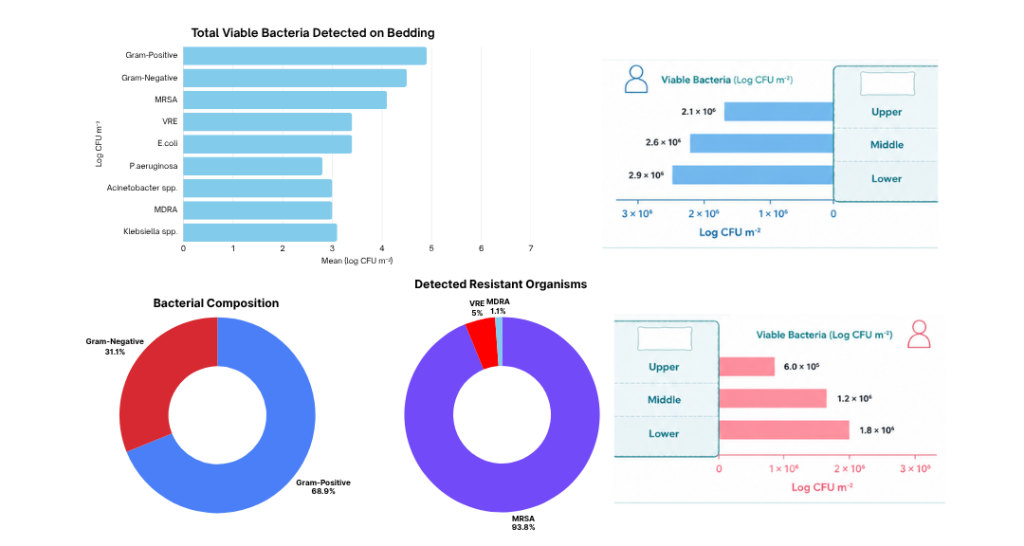
In healthcare settings, bedding can present additional challenges in maintaining hygiene. Research has detected substantial microbial loads on used bedsheets, including multidrug-resistant organisms such as methicillin-resistant Staphylococcus aureus (MRSA).
The detection of MRSA on sampled healthcare bedsheets raises concerns about microbial contamination in these environments and highlights the importance of monitoring microbial contamination on bedding surfaces.
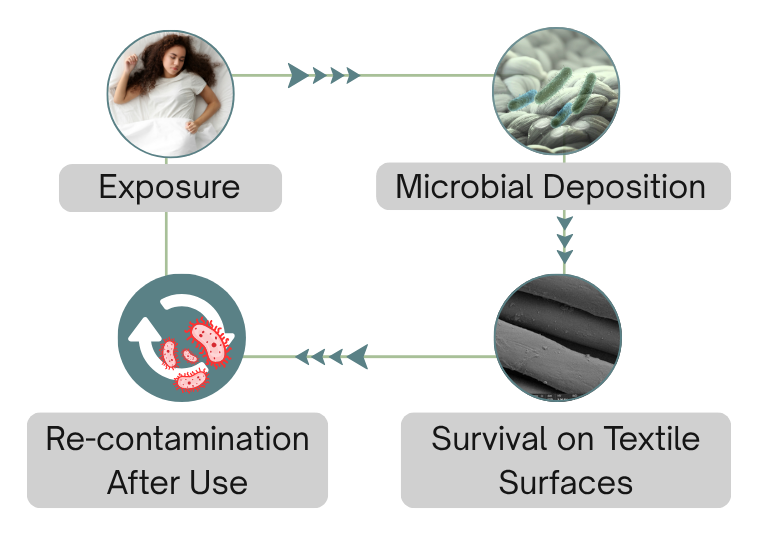
Microbial contamination on bedding is not necessarily a one-time event. Textiles can be repeatedly exposed to microorganisms through daily activities and contact with their surrounding environment.
This process may involve several stages, including microbial deposition, survival on textile surfaces, exposure through contact, and re-contamination after use.
Although cleaning can help reduce microbial contamination, everyday activities may introduce new microorganisms onto textile surfaces, making contamination an ongoing consideration in maintaining bedding hygiene.
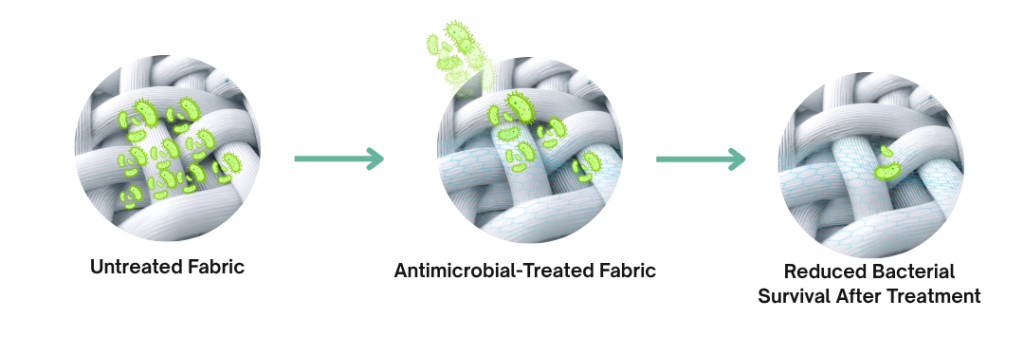
Traditional laundering can reduce microbial contamination, but textiles may be re-exposed to microorganisms during daily use. Research has explored antimicrobial-treated textiles as one possible approach to microbial control.
One study exploring antimicrobial-treated textiles reported that MAP-1-treated bedsheets achieved approximately 80% reduction in total bacteria and approximately 87% reduction in MRSA over repeated use cycles.
References
Šarac, J., et al. (2025). Linking the bed dust microbiome with environmental factors and child respiratory health. Annals of Human Biology, 52(1), Article 2509606.
Farid, A., Han, W., Kwan, J. K. C., & Yeung, K. L. (2025). Enhancing bedding hygiene in long-term care facilities: Investigating the impact of multilevel antimicrobial polymers (MAP-1) on bacterial and MDRO reduction. Antimicrobial Resistance & Infection Control, 14, Article 36.