
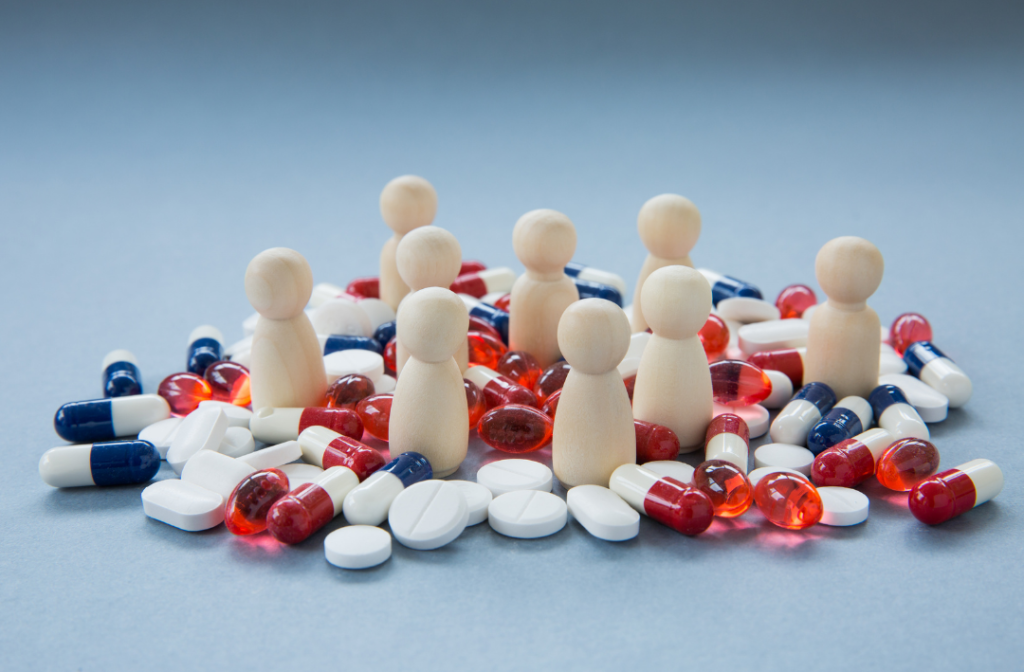
Our body contains trillions of beneficial microbes that help with digestion, immune defence, skin protection, and microbial balance.
However, when antibiotics are overused:
Over time, the body becomes more vulnerable.
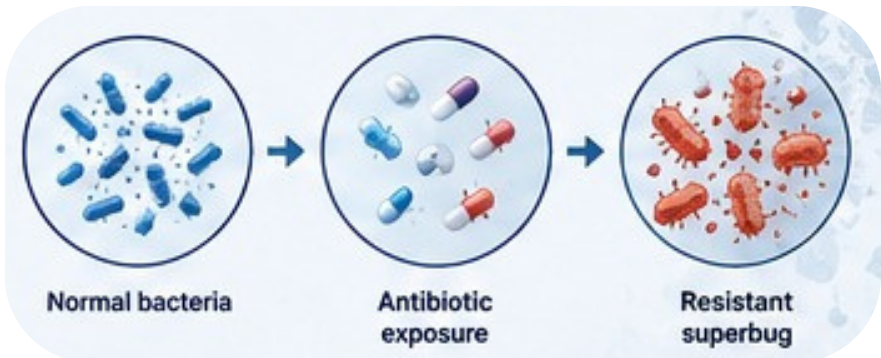
Every time bacteria survive antibiotic exposure, they can adapt. When normal bacteria are exposed to antibiotics, resistant bacteria may survive and continue to multiply.
Some bacteria are now resistant to multiple antibiotics, including:
As antimicrobial resistance increases:
This is why AMR is considered one of the world’s biggest public health threats.
Antibiotics only work against bacterial infections.
Works For (Bacterial Infections)
Doesn’t Work For (Viral Infections)
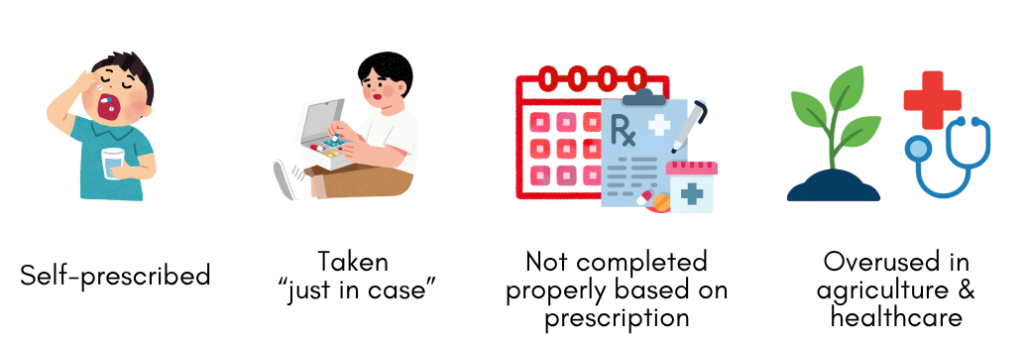
Despite this, antibiotics are often:
Overuse and misuse of antibiotics causes superbugs.
Superbugs are bacteria that develop antibiotic resistance when antibiotics are used inappropriately to treat infections. When a person contracts an infection brought on by a superbug, antibiotics are ineffective.
Each year, thousands of people die from these infections, with infants, young children, and older adults being most at risk. These deaths are preventable, but only if antibiotics are used responsibly.
Using antibiotics inappropriately causes irreversible harm.
AMR is not just a medical issue. It’s a global sustainability challenge.
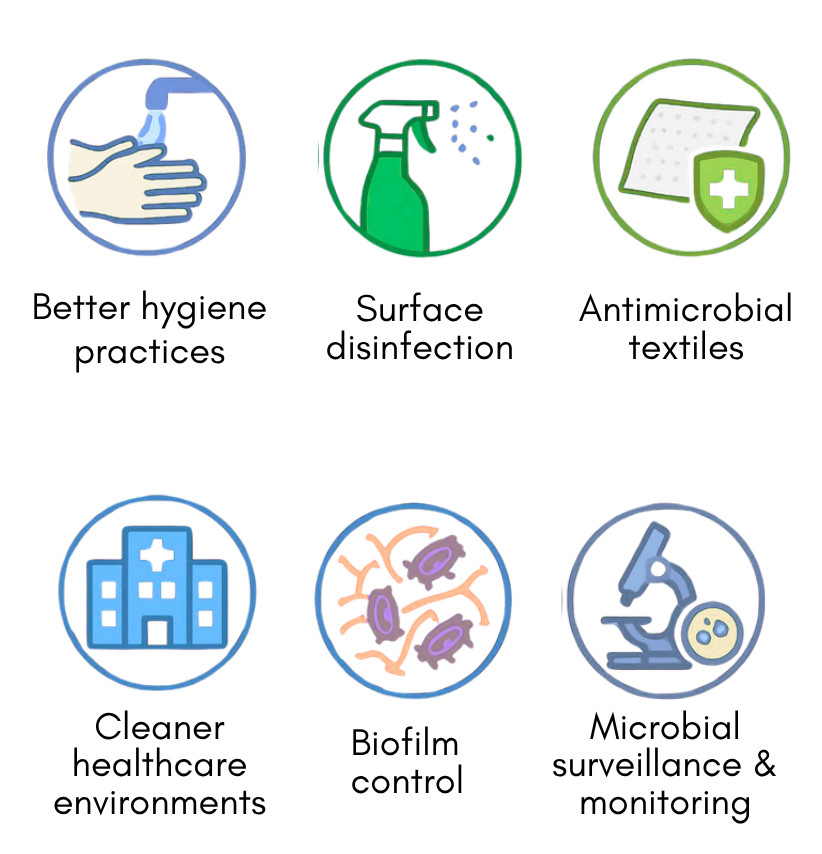
Reducing infection risk helps reduce antibiotic dependence.
By strengthening hygiene practices across daily life and healthcare settings, we can reduce the chances of infections before they even start. This includes consistent hygiene practices, proper surface disinfection, and maintaining cleaner environments in hospitals and public spaces.
Advanced solutions such as antimicrobial textiles and treated surfaces help reduce microbial contamination continuously, while proper biofilm control targets bacteria that can survive routine cleaning.
Microbial surveillance and monitoring add another layer by verifying hygiene effectiveness and detecting risks early.