

Most antibacterial claims use percentages, such as 99%, 99.9%, 99.99%, and 99.9999%. These percentages may look similar, but every additional “9” represents a significant reduction in the number of surviving microorganisms. That is why microbiologists often use log reductions instead.
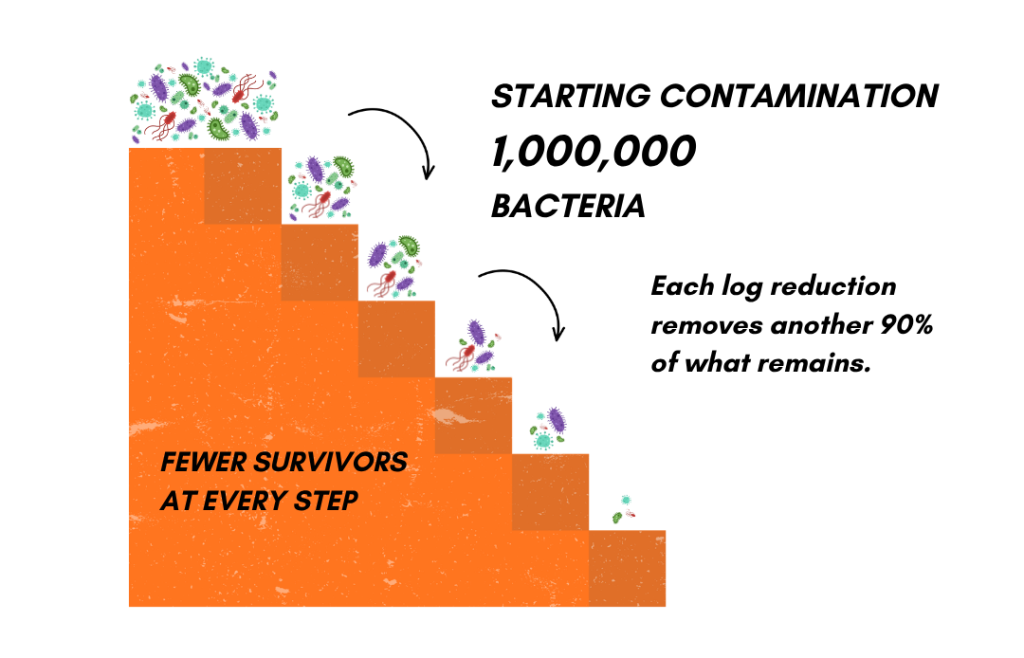
A log reduction measures the reduction of a microbial population by factors of 10. For example, starting with a contamination level of 1,000,000 bacteria, each log reduction removes another 90% of the remaining bacterial population.
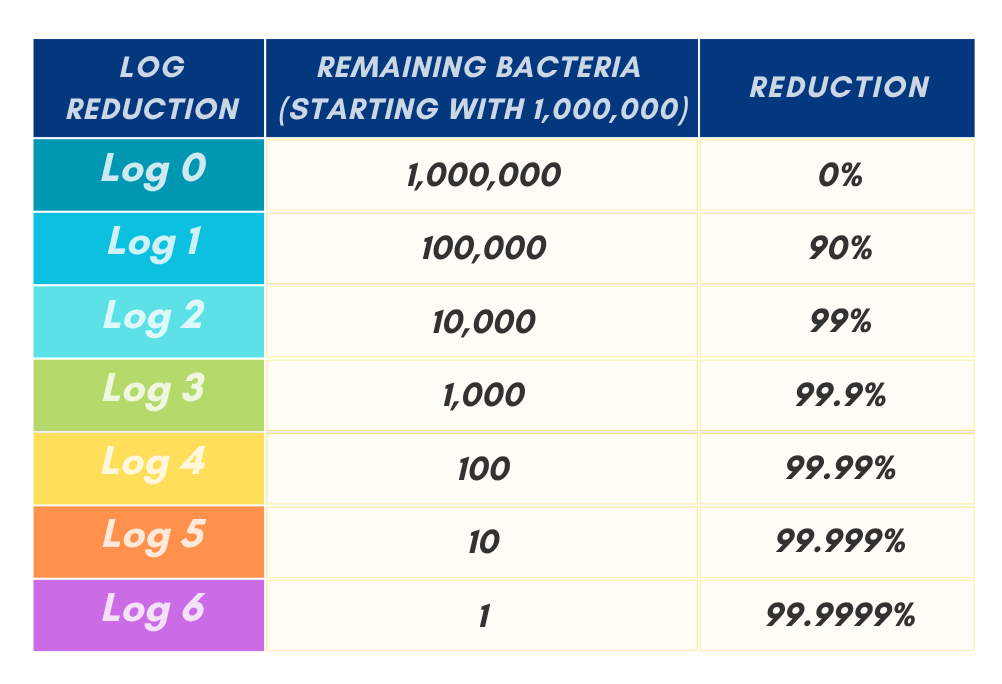
Starting with a population of 1,000,000 bacteria, each log reduction represents a tenfold decrease in the number of remaining bacteria. At Log 0, there is no reduction, leaving 1,000,000 bacteria. At Log 1, the population decreases to 100,000 bacteria, representing a 90% reduction. This continues through Log 2 (99%), Log 3 (99.9%), Log 4 (99.99%), Log 5 (99.999%), and Log 6 (99.9999%), with each additional log reduction leaving ten times fewer bacteria than the previous level.
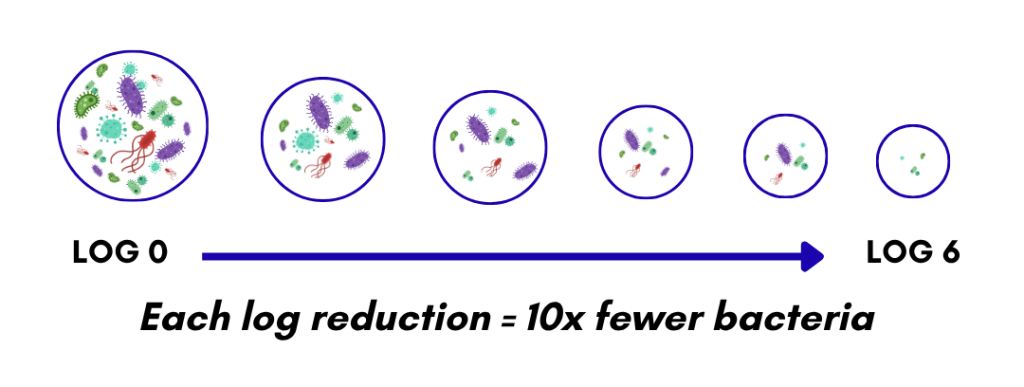
The goal is not just to kill microbes, but to reduce the number of survivors to a level where transmission becomes less likely. Higher log reductions can be particularly important in healthcare facilities, medical textiles, critical care environments, high-touch surfaces, and outbreak management.
When evaluating antimicrobial efficacy, it is important to look beyond percentage claims and consider the following questions: