
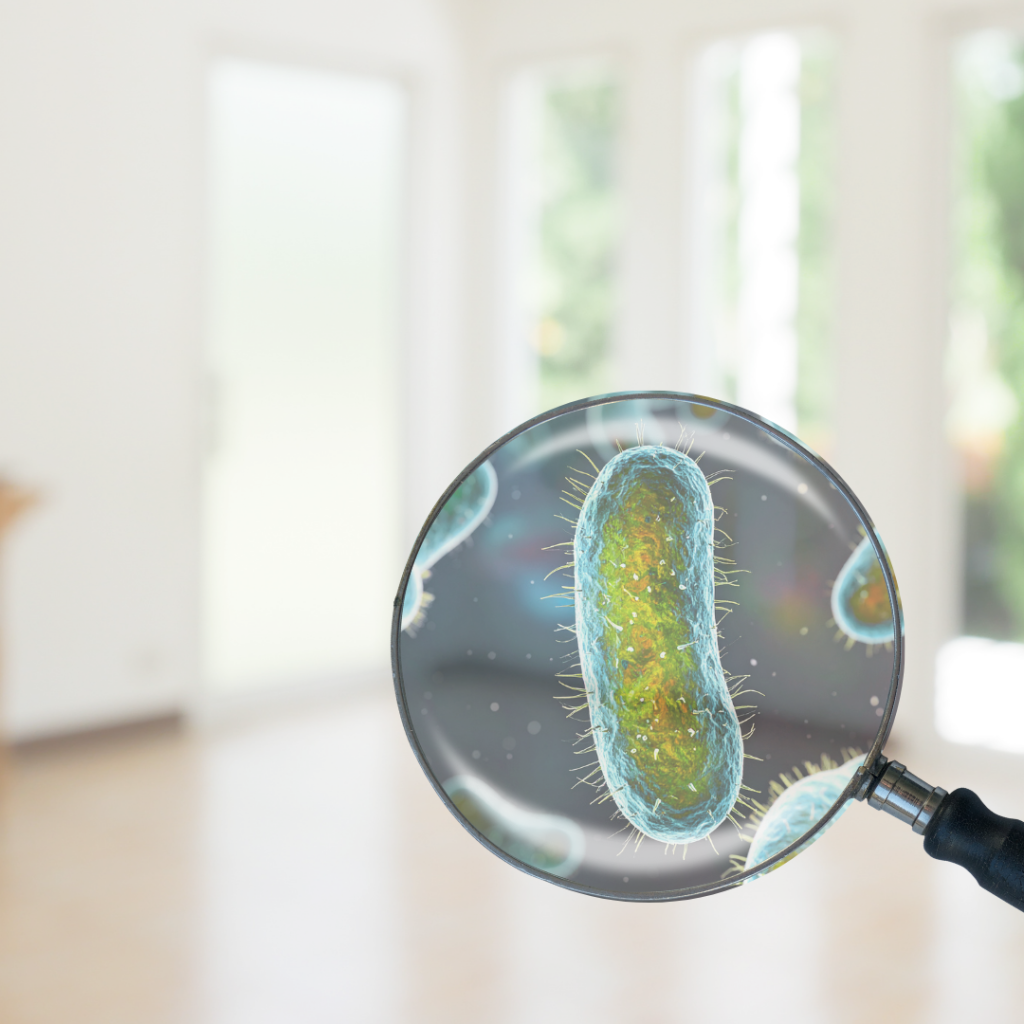
Exploring the Viable But Non-Culturable (VBNC) State and Why “Not Detected” Does Not Always Mean “Gone.”

Routine microbiological testing relies on culture methods to detect microorganisms that can grow under laboratory conditions. However, some bacteria can enter a state where they remain viable but cannot grow under routine culture conditions.
This state is known as Viable But Non-Culturable (VBNC).
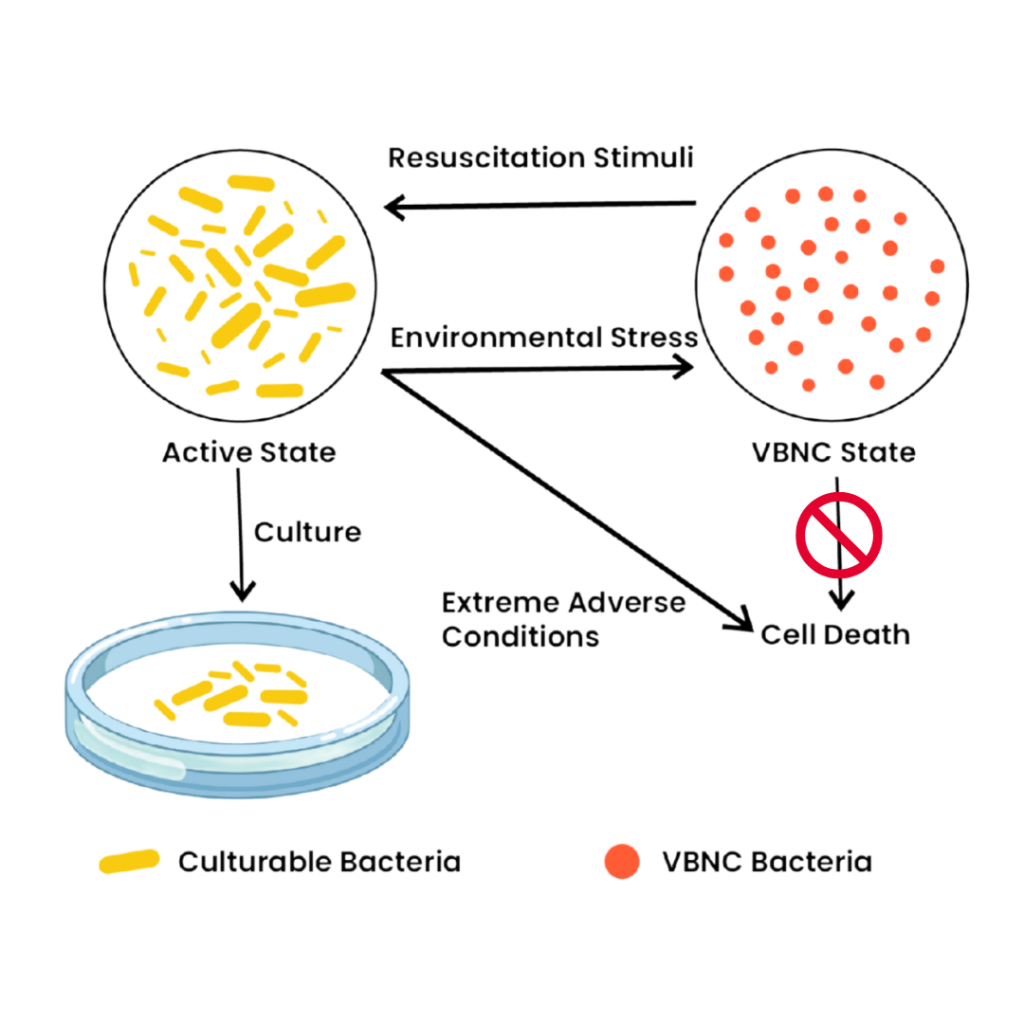
In the VBNC state, microorganisms remain alive and maintain metabolic activity, but cannot grow under routine laboratory culture conditions.
They are not dead. Because of this, VBNC microorganisms may escape conventional culture-based detection.
No growth does not necessarily mean no viable microorganisms.
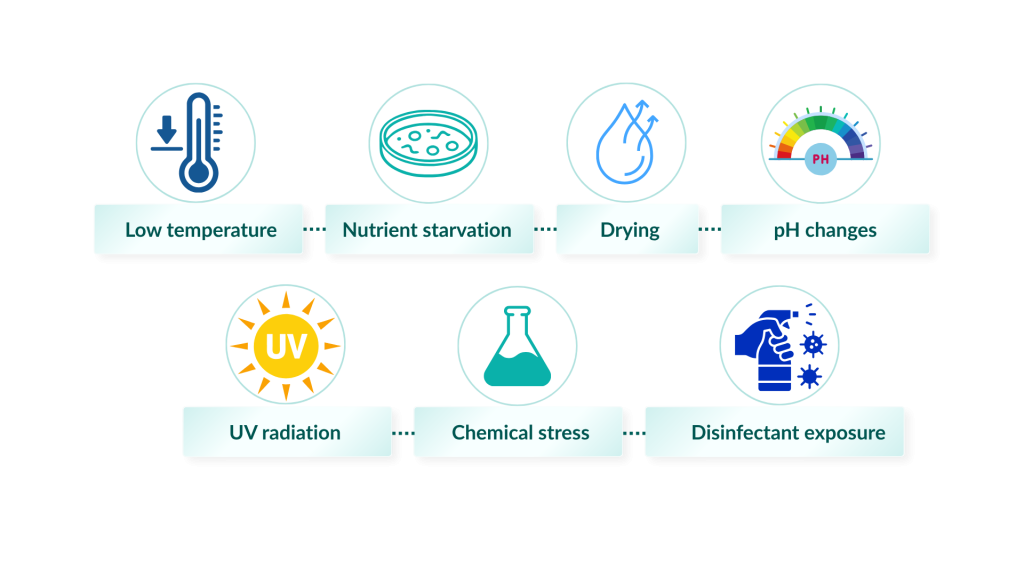
Environmental stress can trigger this survival response. Examples include:
Instead of dying, some microorganisms may enter the VBNC state as a survival response to environmental stress.
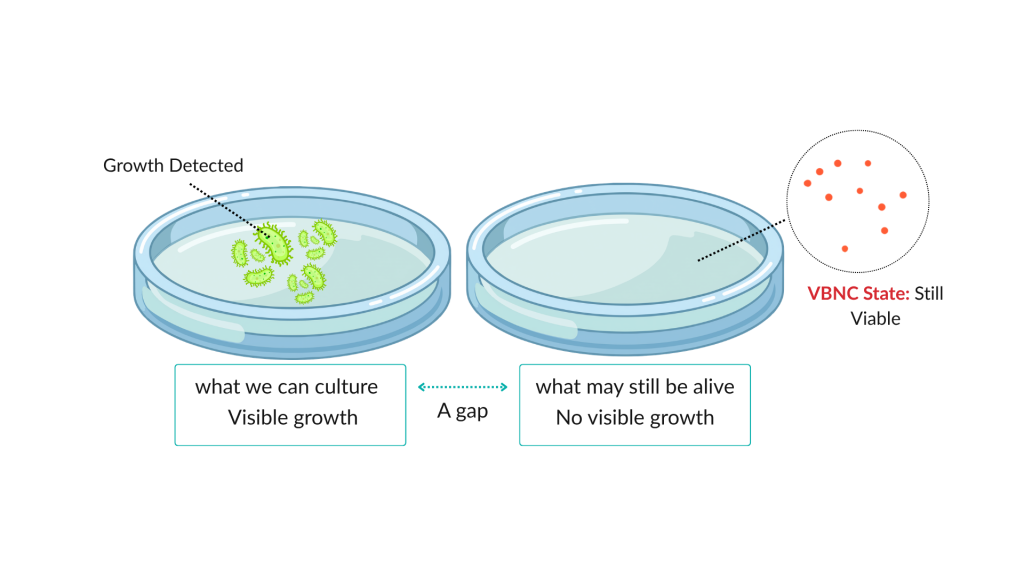
Routine culture looks for microorganisms that can grow under specific laboratory conditions. However, VBNC microorganisms may still be viable even when no growth is observed. This creates a gap between what we can culture and what may still be alive.
The VBNC state is relevant to food safety and public health because some viable microorganisms may remain undetected by conventional culture methods. Under favourable conditions, VBNC cells may return to an active and culturable state — a process known as resuscitation. Thus, culturability does not always reflect microbial viability.
Because culture methods may miss them, researchers use alternative approaches:
Different methods reveal different aspects of microbial viability.
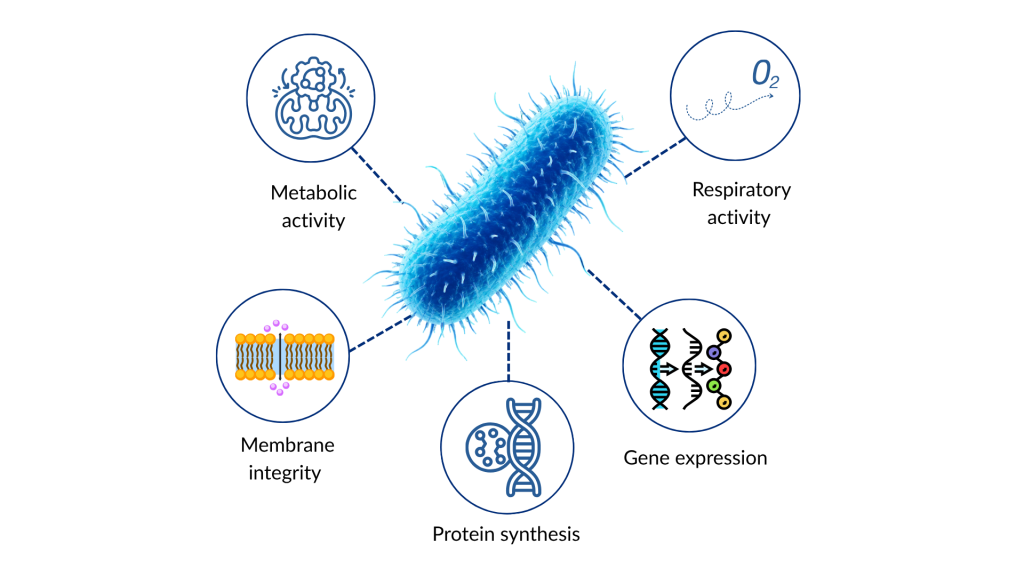
VBNC microorganisms may retain several biological functions while remaining non-culturable under routine conditions, including:
Microbial viability is not always reflected by what can be detected through routine culture methods.
This highlights the importance of looking beyond one-time cleaning — towards hygiene approaches that help maintain antimicrobial protection over time.
References
Kaygusuz İzgördü et al. (2022). Overview of VBNC, a Survival Strategy for Microorganisms.