
The microbial environment inside towels is more complex than surface contamination alone.
Unlike many textiles, towels combine several characteristics that may influence microbial persistence. These include moisture retention, repeated daily use, a dense fibre structure, and the accumulation of organic matter from daily use, such as sweat, sebum, and skin cells.
Together, these conditions can support microbial persistence.
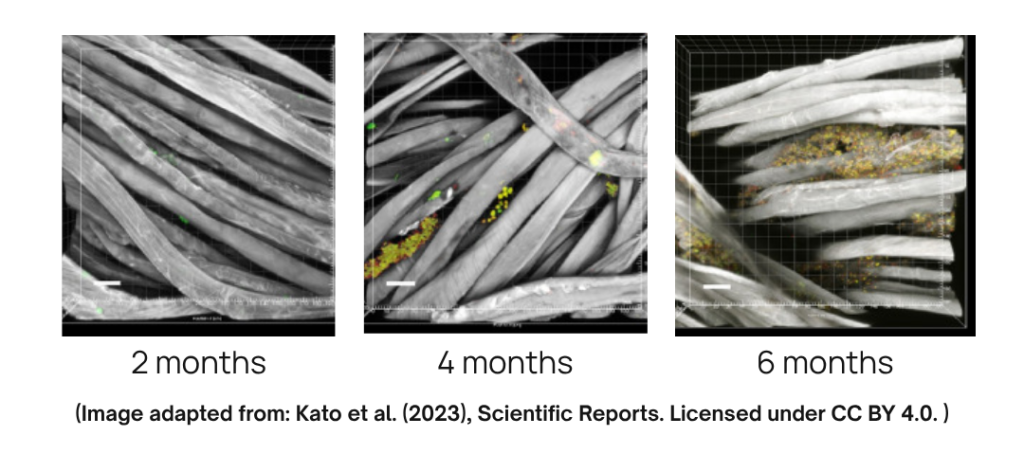
Over six months of household use, researchers observed biofilm structures developing within towel fibres. Microscopy revealed microbial aggregation consistent with biofilm formation.
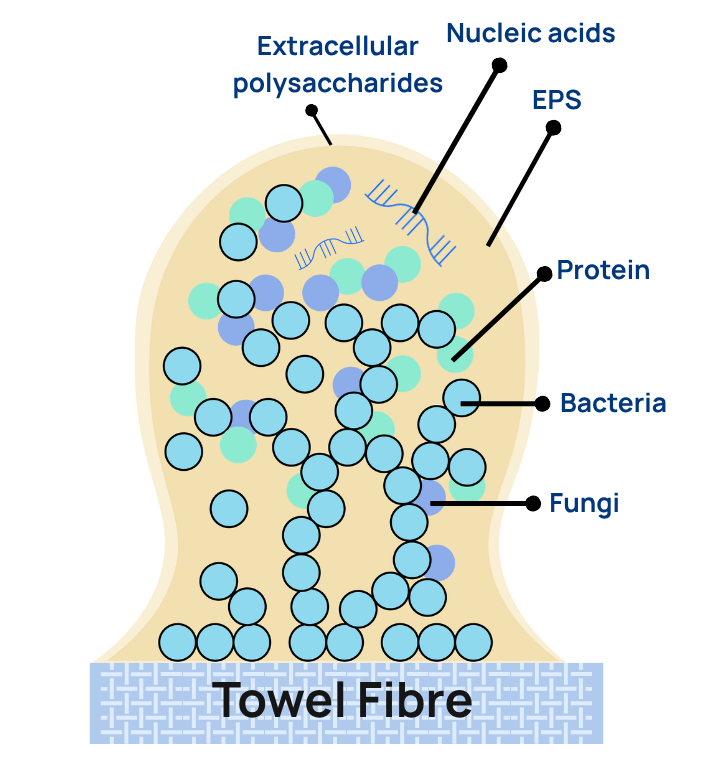
Biofilm contains an extracellular polymeric substance(EPS) together with microbial components.
The study reported increasing levels of several components over time, including:
These components were observed to increase over time.
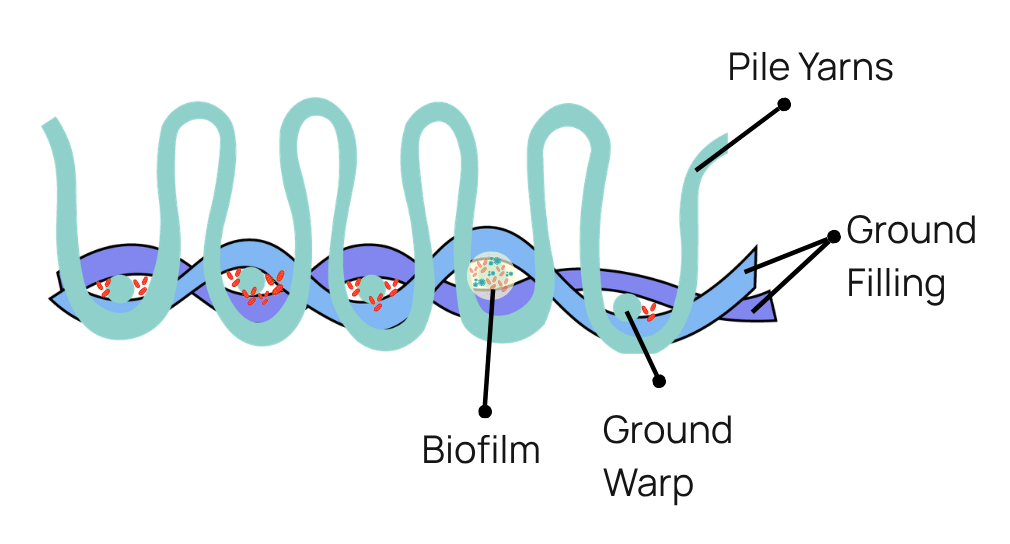
Biofilm was observed primarily within the towel’s ground warp structure rather than the exposed pile. This suggests microorganisms may remain within deeper fibre regions.
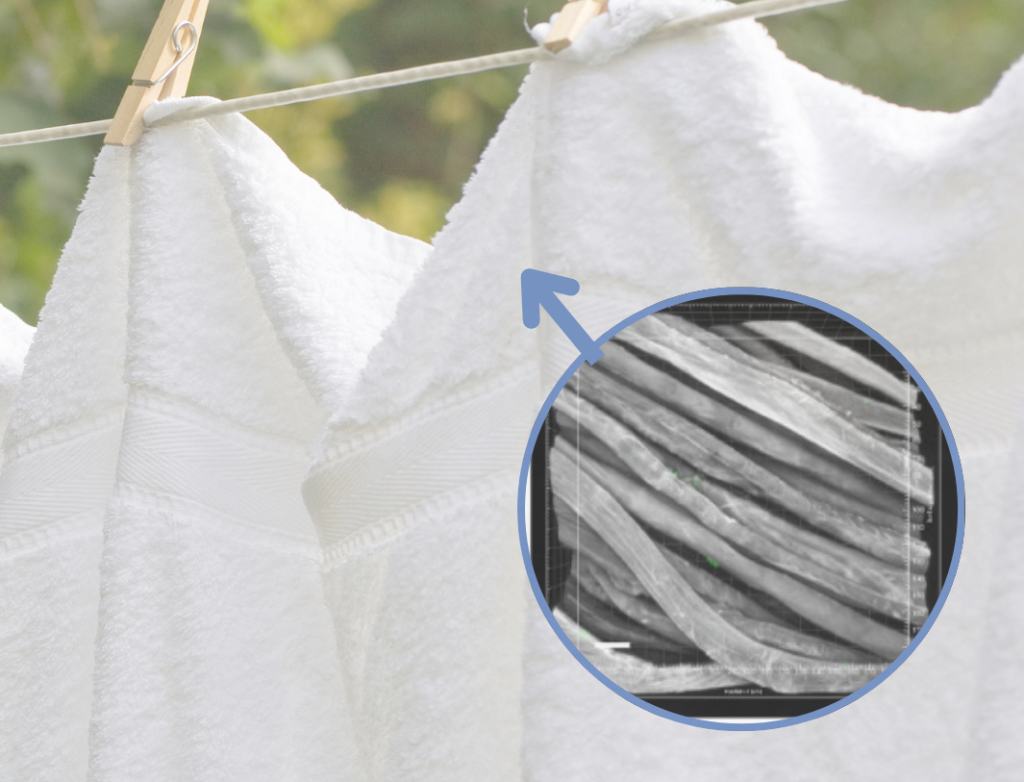
Laundering helps reduce microbial contamination but may not completely remove biofilm-forming microorganisms.
The study suggested that washing conditions may also influence microbial transfer and recontamination between textiles.
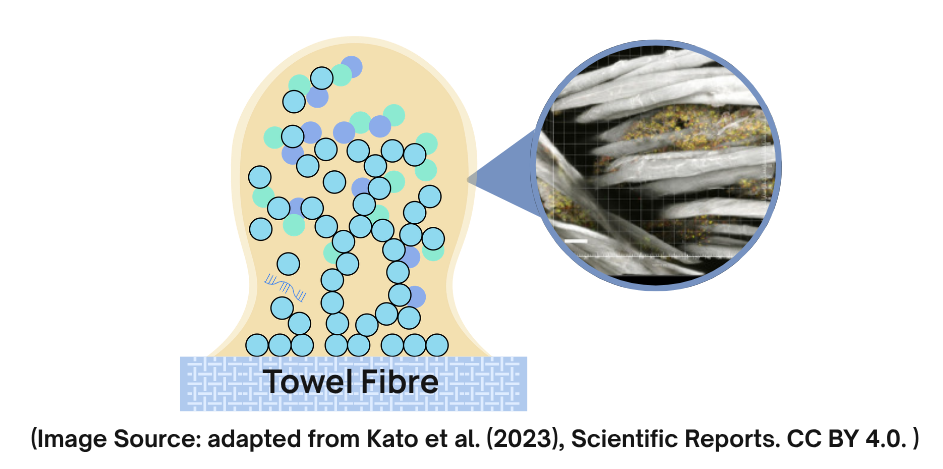
The towel microbiome differed significantly from typical human skin microbiota. Certain bacterial groups showed stronger associations with biofilm components, fibre dullness, and adaptation to the towel fibre environment.
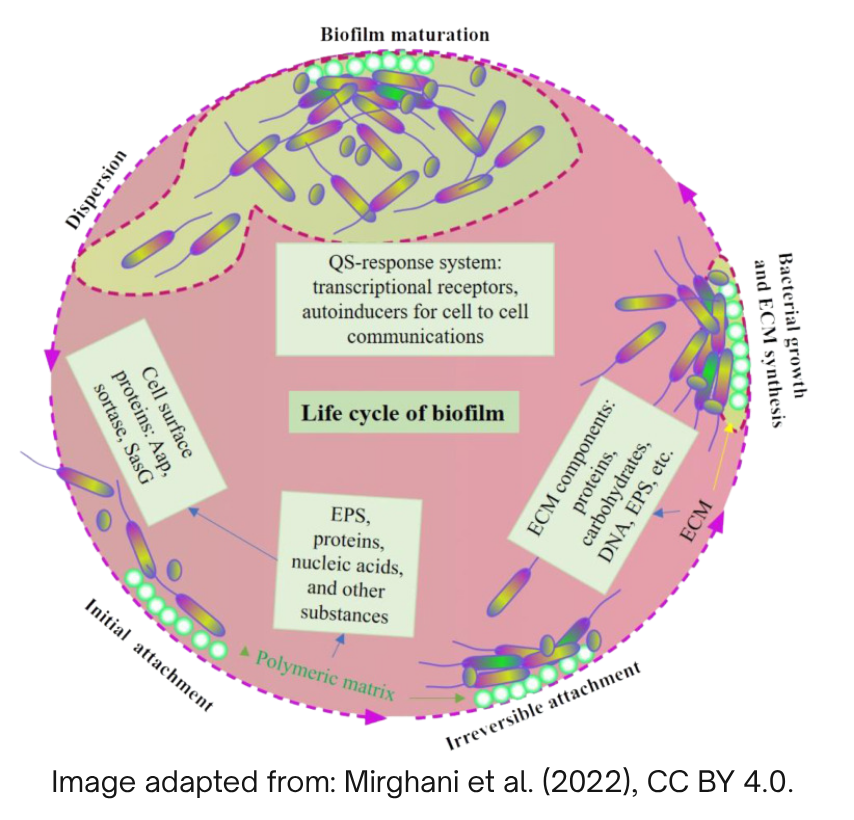
Biofilm development can involve several stages, including:
Daily use continuously introduces new microorganisms, while biofilm development can promote long-term microbial persistence.
Reference
Kato H. et al. (2023). Analysis of biofilm and bacterial communities in the towel environment with daily use. Scientific Reports.