
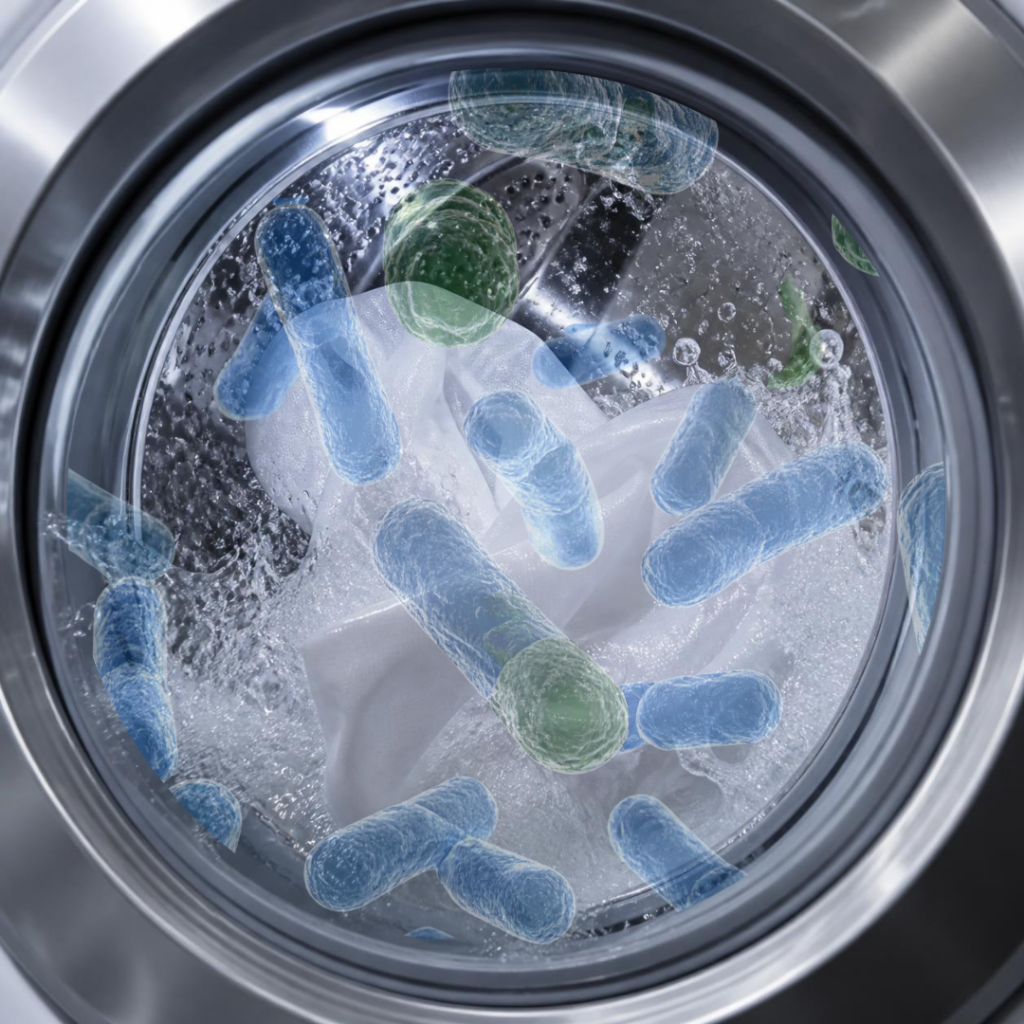
Laundry removes visible dirt — but textiles may still carry complex microbial communities.
Laundry is not just cleaning — it is managing a changing microbial ecosystem.
Throughout the wear–wash–dry cycle, fabrics interact with:
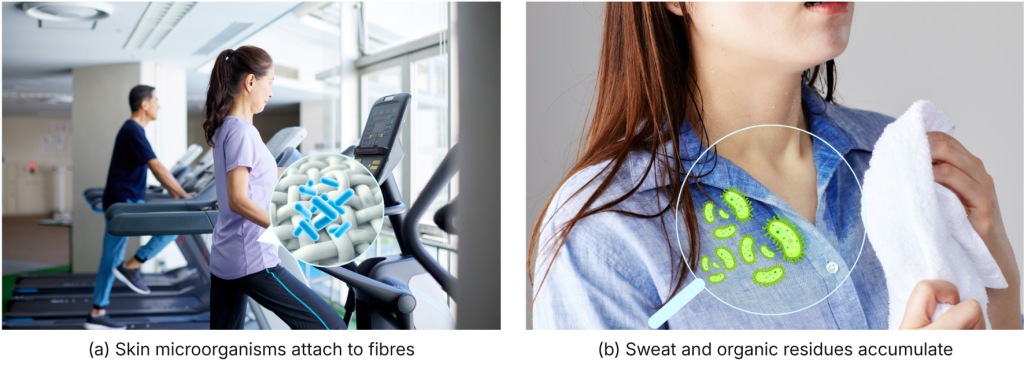
During daily use:
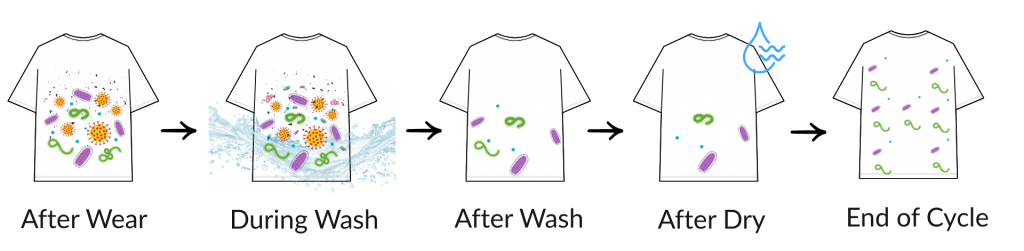
During washing and drying, some microorganisms are removed, while others may be introduced from the washing environment, including:
As a result, the textile microbiome is reshaped.
Laundry does not simply remove microbes — it changes the textile ecosystem.
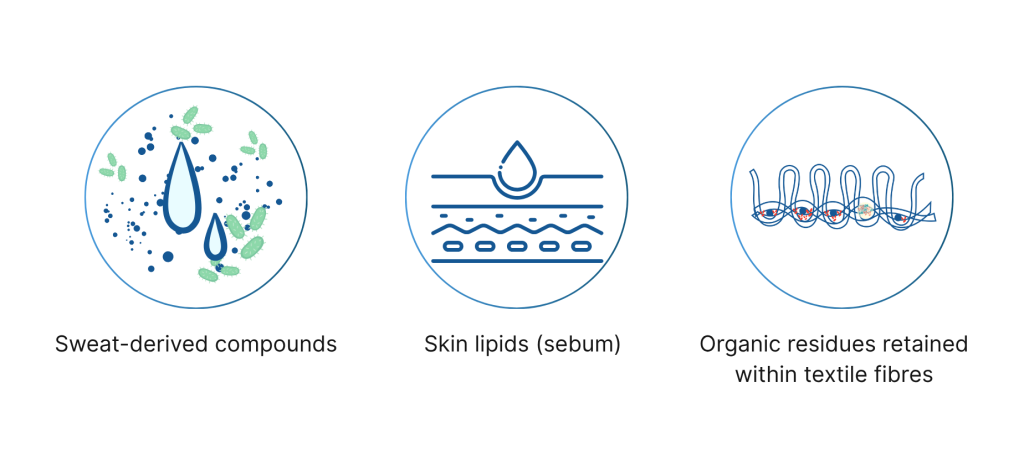
Textile odour is primarily associated with microbial metabolism of organic residues accumulated during wear.
Microorganisms break down:
This process produces volatile organic compounds (VOCs) that contribute to unpleasant textile odours.
Microbial activity depends strongly on moisture.
Dry Conditions:
Humid Conditions:
Washing machines contain microbial communities influenced by:
During washing, microorganisms from the washing machine environment can transfer to textiles.
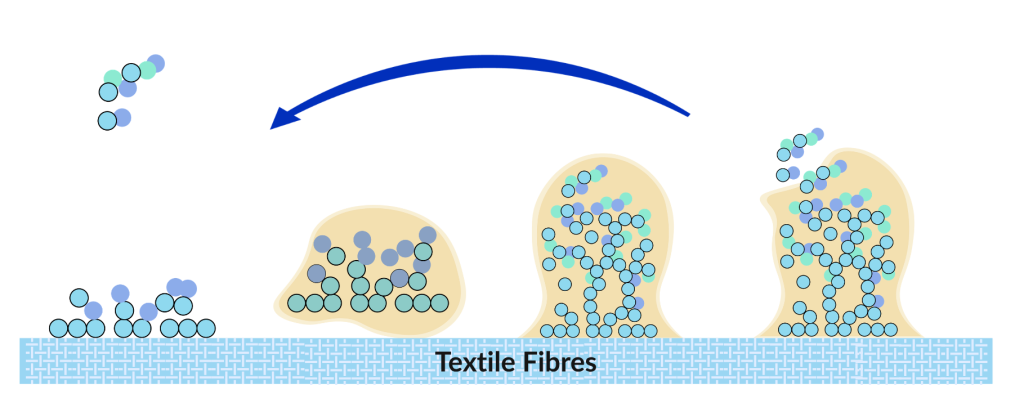
Some bacteria can form biofilms — structured communities protected by a self-produced matrix.
Biofilms help microorganisms:
Laundry hygiene depends on interactions between:
Washing does not necessarily eliminate all microorganisms; it can reshape the microbial environment of textiles.
Supporting longer-lasting textile hygiene involves considerations that extend beyond the wash cycle.
The wear–wash–dry cycle shows that cleaning does not always mean complete microbial removal. Microorganisms can persist, interact with textile surfaces, and contribute to odour and hygiene challenges.
Reference
Díez López, C., et al. (2025). Unravelling the Hidden Side of Laundry: Malodour, Microbiome and Pathogenome. BMC Biology.