


Scanning electron micrograph of a bacterial biofilm on an orthopedic screw.
Source: Clinician’s Brief
Biofilms are groups of microbes that stick together on a surface and protect themselves with a slimy, glue-like layer they produce. They can form on medical devices, body tissues, and everyday surfaces in the environment.


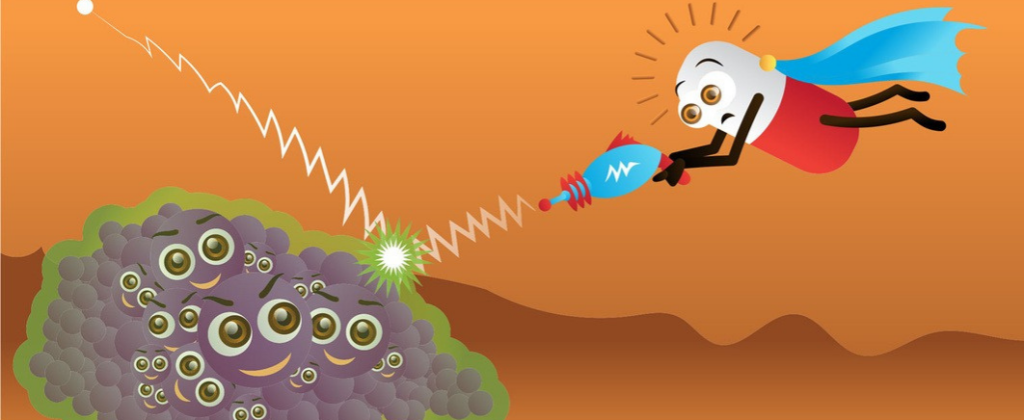
Bacteria within a biofilm can be 10–1,000× more resistant to antibiotics than free-floating cells.
This happens because the biofilm matrix:
Together, these mechanisms hinder effective treatment.
Antimicrobial Resistance (AMR) emerges when microbes evolve or acquire traits that let them survive drug exposure.
Biofilms accelerate this through:
- Horizontal gene transfer (HGT) – increased spread of resistance genes among cells within the dense biofilm community.
- High mutation rates and adaptive responses.
- Protection of dormant cells, allowing survival and recurrence of infection.
All of these contribute to multidrug-resistant organisms (MDROs).

The aim is to break the biofilm’s protective layer so germs inside can be more easily killed or removedThis can be done using physical, mechanical, chemical, and biological approaches.

Chemical agents like chlorine‑based sanitizers, hydrogen peroxide, and quaternary ammonium compounds can damage biofilm bacteria and sometimes disturb the matrix itself, especially when combined with detergents.