
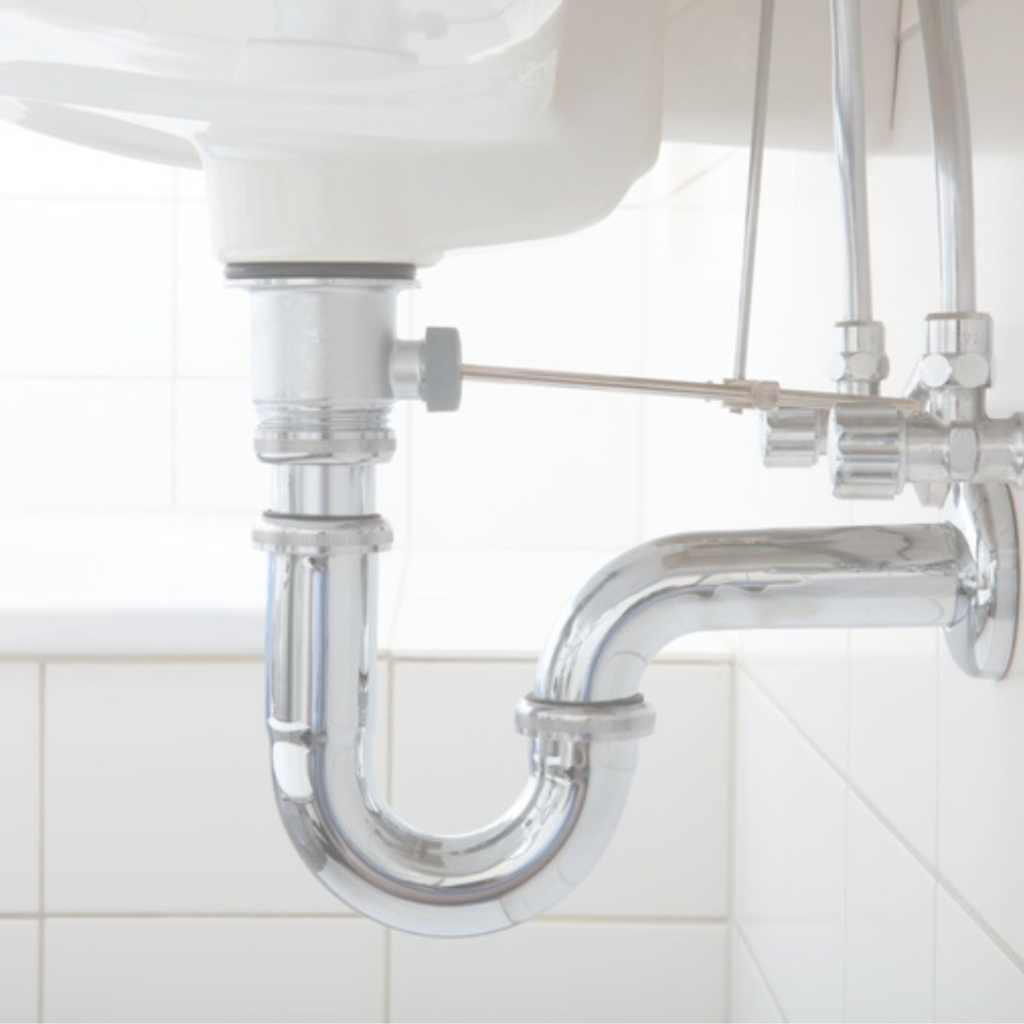
Sinks and floors may be routinely cleaned, but up to 99% of drain pipe interiors can harbour bacterial communities. Stagnant water in the trap creates a warm, undisturbed environment for microbial growth.
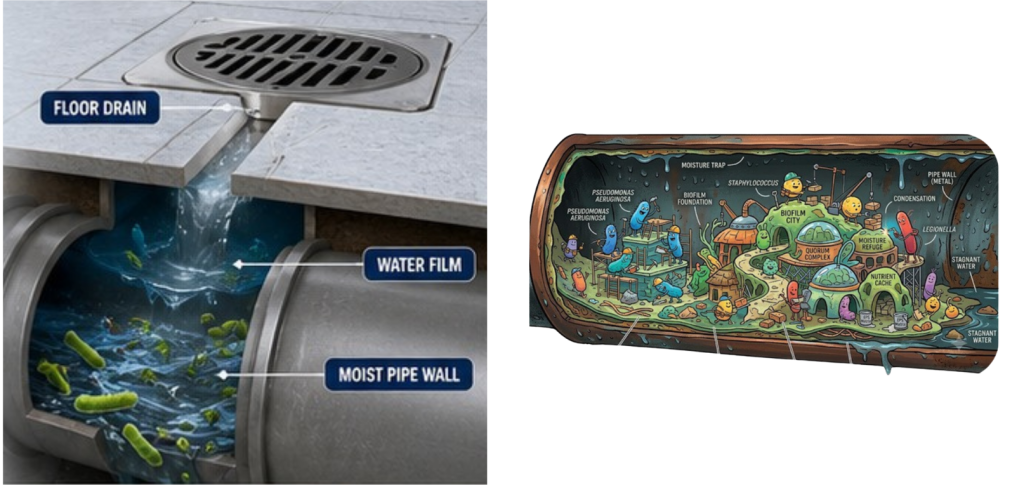
Unlike most surfaces, drains rarely dry completely. Persistent moisture allows microorganisms to survive, multiply, and establish communities.
Think of it as a permanent home instead of a temporary stop.
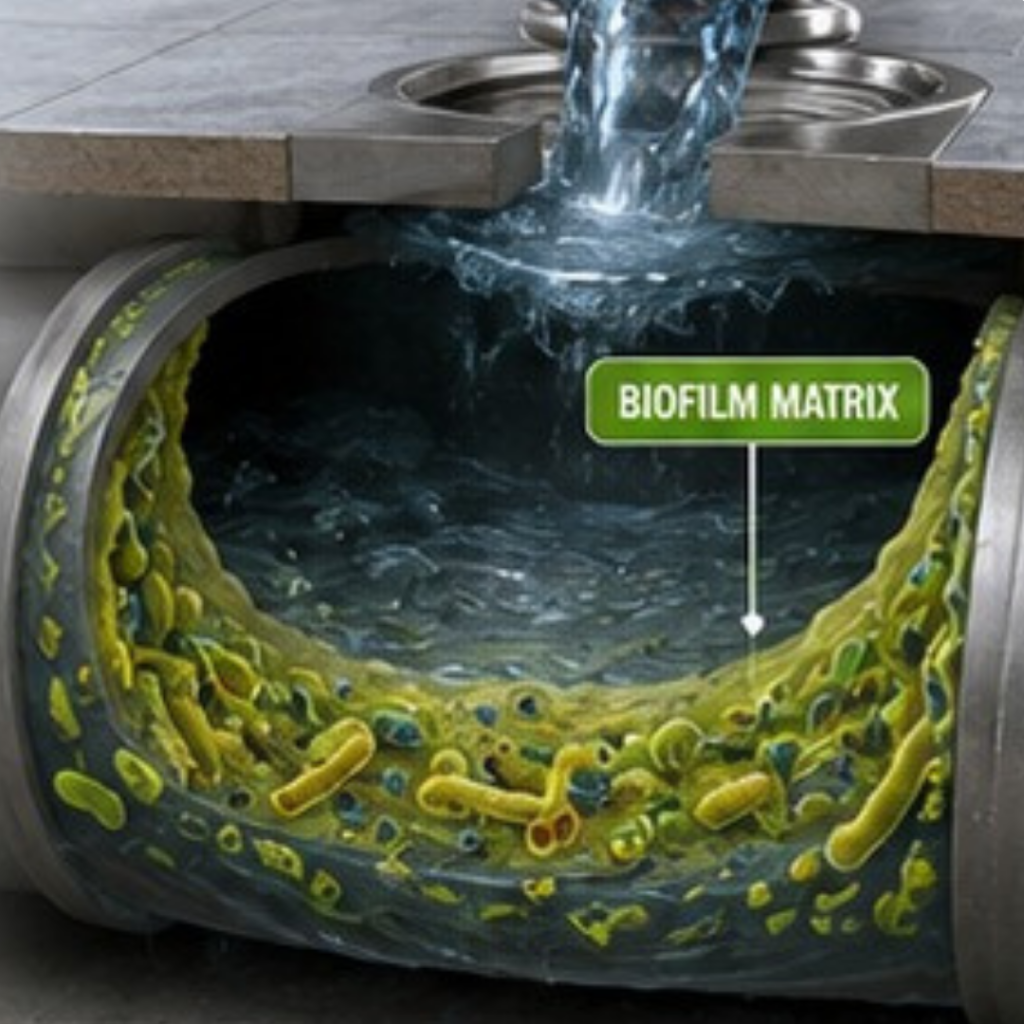
Once bacteria attach to the pipe surface, they begin producing a protective matrix. This becomes a biofilm.
Biofilms can:
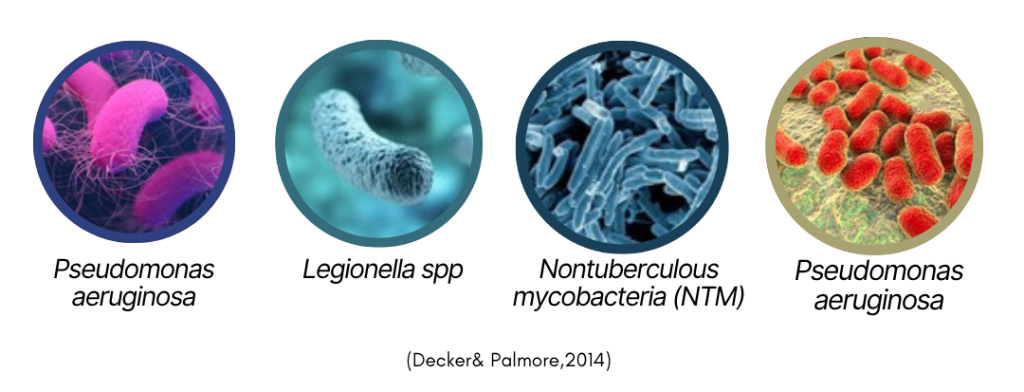
Pathogens frequently detected in hospital water biofilms include:
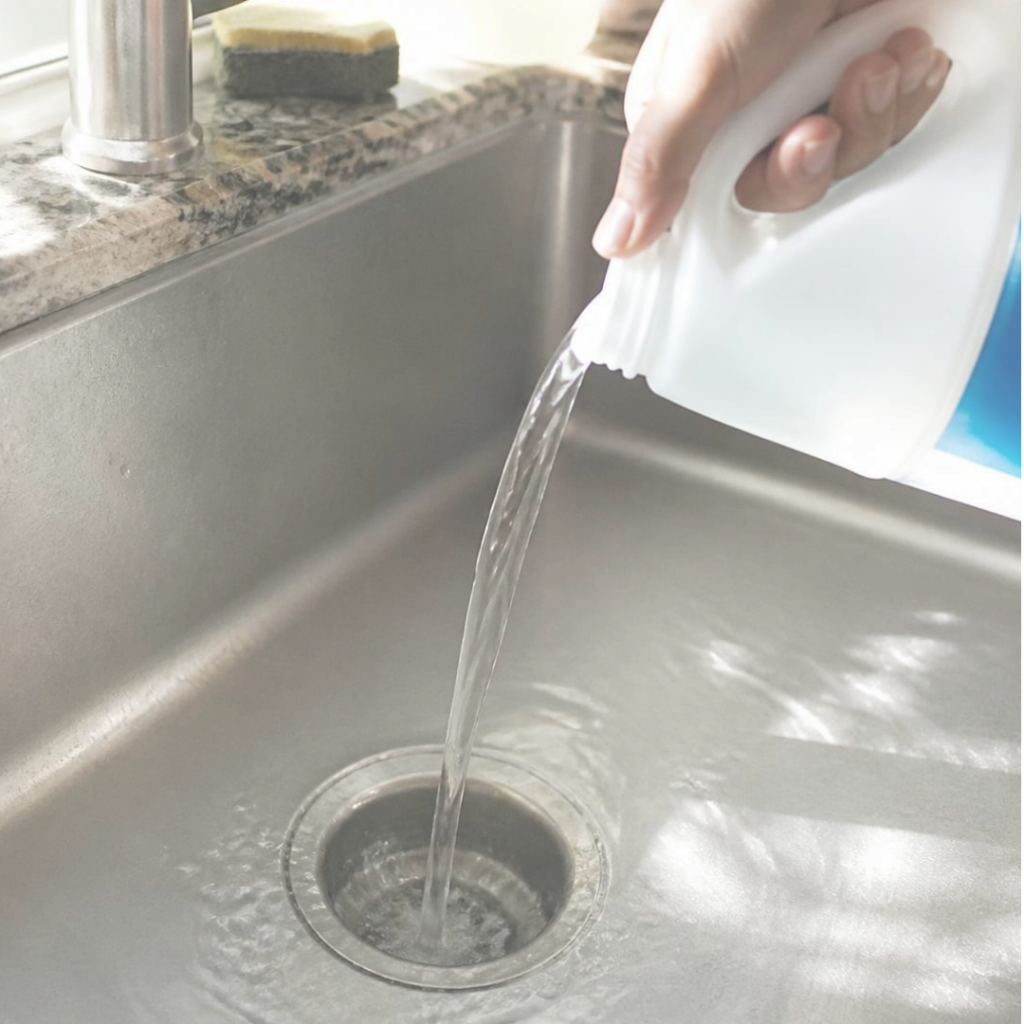
Studies have reported that bleach may penetrate less than 20% of the biofilm thickness before being consumed or neutralized through reactions with the biofilm matrix.
As a result, microorganisms located deeper within the biofilm may receive insufficient exposure to achieve effective killing.
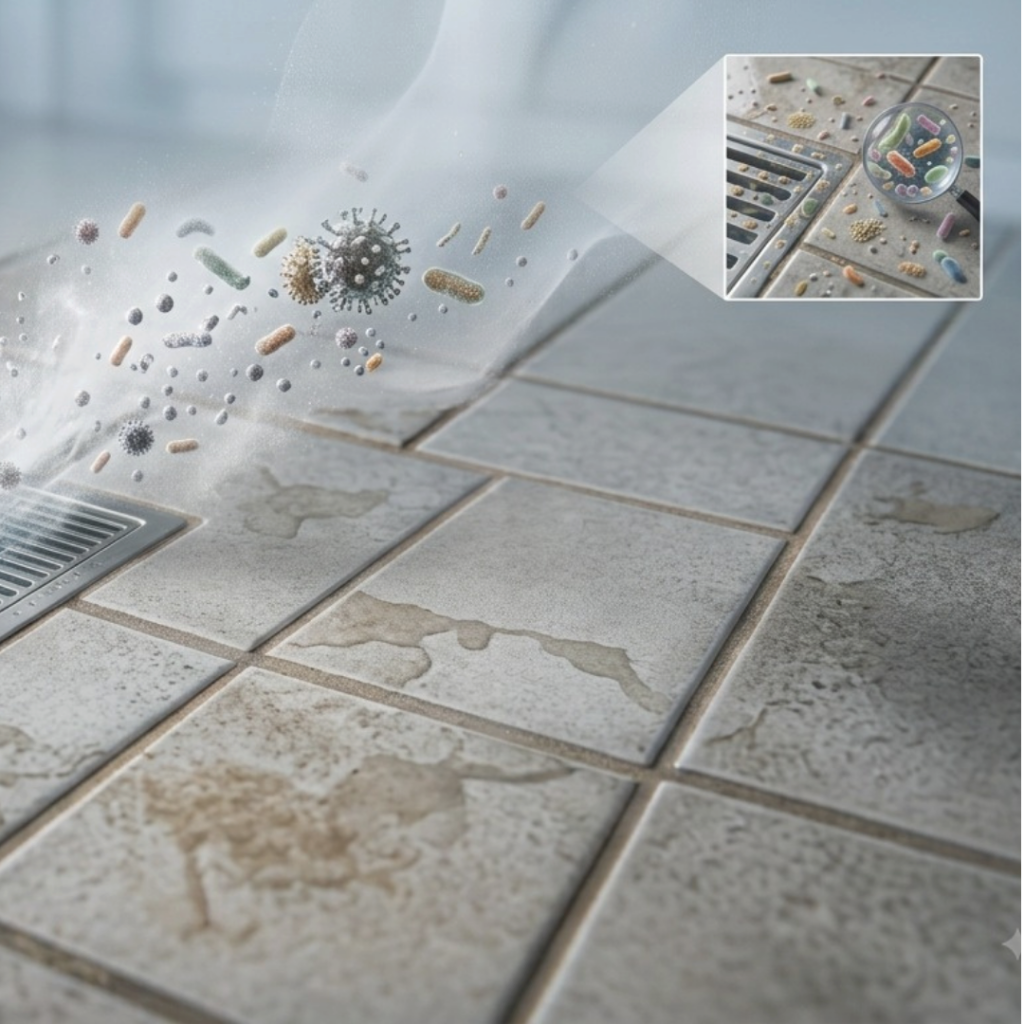
Water movement and splashing can spread microorganisms from contaminated drains or sink holes to nearby surfaces. But the spread doesn’t stop when the water stops.
Studies have found that viable bacteria can remain on sink surfaces even without visible water flow. This can happen through droplets and aerosols, contaminated hands, equipment, or other contact pathways.
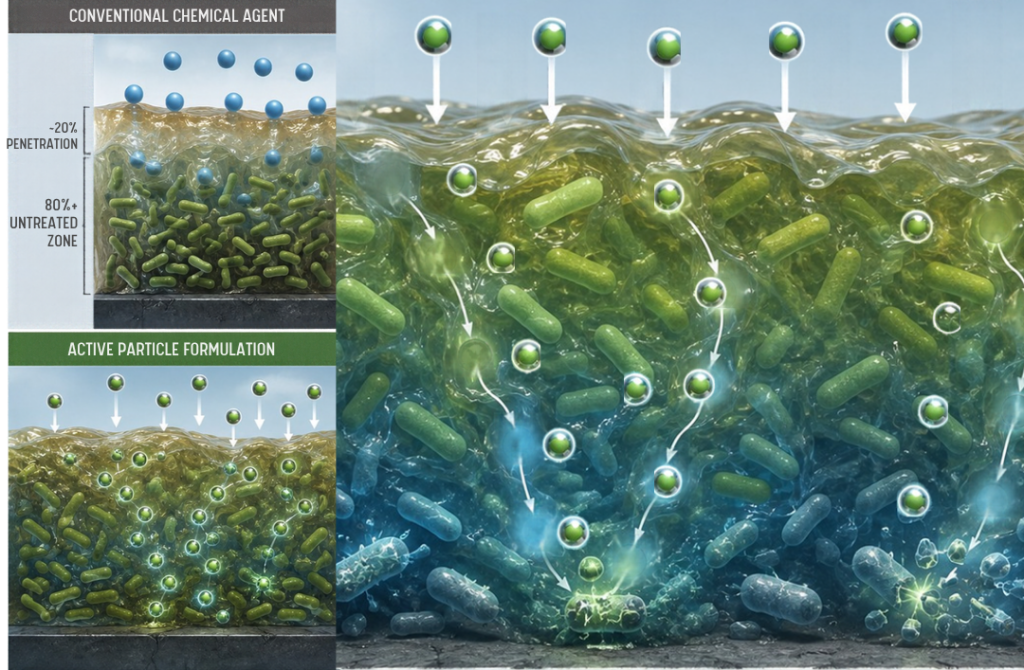
Active particles in a chemical-based agent are designed to enhance penetration through the biofilm matrix, enabling the antimicrobial agent to reach microorganisms residing in deeper layers.